
Research labs optimize sample separation by selecting centrifuges suited to specific sample types, considering volume, density, and sensitivity. They adjust spin speeds and run times to balance effective sedimentation and sample integrity. Best rotor types and accessories enhance efficiency and maintain conditions like temperature ultracentrifuge. Labs also follow protocols to prevent imbalance and equipment damage. Understanding these strategies helps improve separation quality and reliability for diverse research needs, with deeper insights available on fine-tuning each parameter.

How to Choose the Right Centrifuge for Your Sample Type
When selecting a centrifuge, understanding the specific characteristics of the sample is essential. Different sample types—such as blood, cells, or environmental materials—demand varied rotor designs, capacities https://laballiance.com.my/, and speeds to guarantee effective separation.
Factors like sample volume, density, and sensitivity to shear forces influence the choice of centrifuge type, whether fixed-angle, swinging-bucket, or ultracentrifuge. Additionally, temperature control may be vital for heat-sensitive materials, while ease of use and maintenance can impact workflow freedom.
Choosing the right centrifuge empowers users to optimize separation efficiency without compromising sample integrity. Therefore, a precise match between sample requirements and centrifuge capabilities allows researchers to maintain flexibility and achieve consistent, high-quality results in their work.
Setting Optimal Spin Speeds to Maximize Separation
Selecting the appropriate centrifuge is only part of ensuring efficient sample separation; determining the best spin speed is equally important. Ideal spin speeds allow for precise separation based on particle size and density, preventing sample damage or incomplete fractionation.
Research labs focus on balancing speed to maximize yield without compromising sample integrity. Key factors to take into account include:
- Particle characteristics: Different sizes and densities require tailored speeds to achieve clear separation.
- Sample volume and viscosity: Larger or more viscous samples may need adjusted speeds for effective sedimentation.
- Rotor type and radius: These influence centrifugal force, guiding the selection of speed to enhance separation efficiency.
Adjusting Run Times for Better Sample Purity and Yield
Optimizing run times plays a crucial role in enhancing both the purity and yield of separated samples.
Precise control over centrifugation duration allows laboratories to balance the effective sedimentation of target components without overexposing samples to prolonged forces that may cause degradation or contamination.
Shorter runs might lead to incomplete separation, reducing purity, while excessively long runs can decrease yield by compacting pellets too tightly or promoting unwanted aggregation.
Adjusting run times based on sample type, volume, and desired outcome empowers researchers to tailor protocols for maximum efficiency.
Continuous monitoring and iterative adjustments enable freedom to refine processes, ensuring optimal recovery and integrity of biological materials.
This flexibility is essential for advancing experimental accuracy and reproducibility in diverse research settings.
Using Rotor Types and Accessories to Improve Efficiency
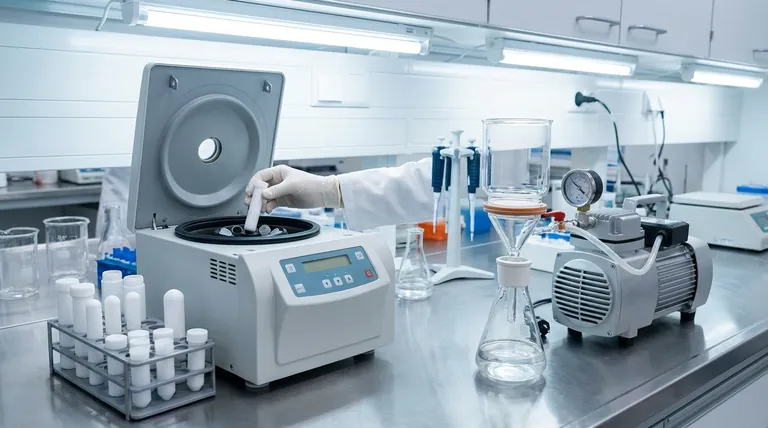
Beyond adjusting run times, the choice of rotor types and accessories markedly influences centrifugation efficiency.
Selecting the appropriate rotor can optimize sample throughput, speed, and separation quality. Accessories further tailor the process to specific sample needs, enhancing versatility.
Key factors include:
- Rotor Design: Fixed-angle rotors allow rapid sedimentation, while swinging-bucket rotors provide better layer separation for density gradients.
- Tube Compatibility: Using adaptors or specialized buckets accommodates various tube sizes, maximizing sample volume without compromising balance.
- Temperature Control Accessories: Cooling systems and temperature monitors maintain sample integrity during prolonged runs, preventing degradation.
Common Challenges in Centrifugation and How Labs Overcome Them
Why do centrifugation processes sometimes yield inconsistent or suboptimal results? Common challenges include improper rotor selection, imbalance during loading, and incorrect speed or temperature settings. These issues can lead to poor separation, sample loss, or equipment damage.
Research labs overcome these obstacles by standardizing protocols and using calibrated instruments to guarantee repeatability. Training personnel on proper loading techniques reduces imbalance risks, while selecting rotors and accessories tailored to sample types enhances efficiency.
Additionally, implementing routine maintenance and verifying centrifuge performance helps maintain peak conditions. By addressing these challenges proactively, labs gain the freedom to achieve reliable, high-quality separations without unnecessary delays or errors, ultimately improving overall research productivity and confidence in experimental outcomes.
Conclusion
Research laboratories optimize sample separation by carefully selecting centrifuges suited to specific sample types, adjusting spin speeds, and fine-tuning run times to enhance purity and yield. Utilizing appropriate rotor types and accessories further improves efficiency. Despite common challenges such as sample imbalance and rotor wear, labs implement strategic protocols to maintain consistent results. Through these combined approaches, centrifugation remains an essential and effective technique in achieving precise and reliable sample separation.